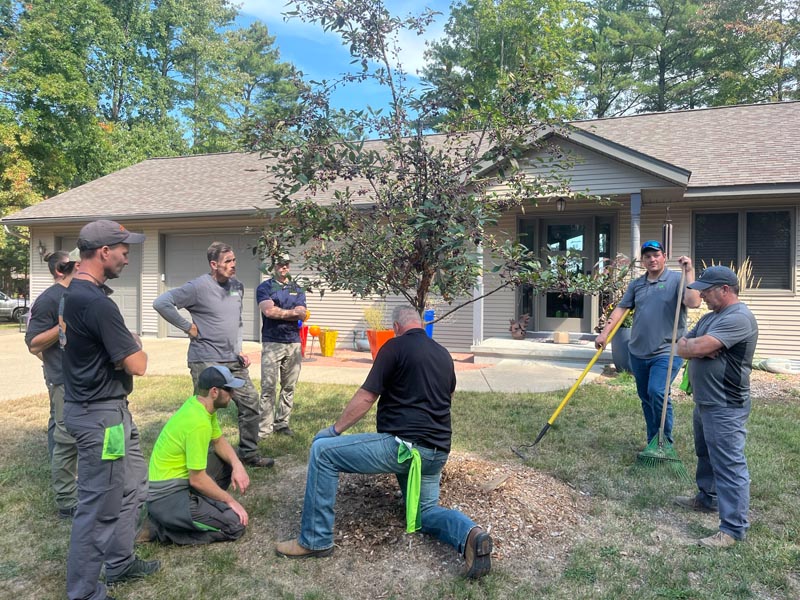
When you think about adding a tree to your property, most people picture the tree itself. What often gets overlooked is the place where it will live. In Wisconsin, Minnesota, and Iowa, soil conditions, sun exposure, and competing roots from existing plants all influence how a tree will perform over time. Taking the time to evaluate these factors before the first shovel breaks ground can make a real difference in how well your landscape achieves balance between shade, seasonal interest, and long-term health.
Assessing soil isn’t just about texture or color. A thorough look beneath the surface reveals how well water moves through the site, how compacted the soil might be, and where drainage patterns could stress young roots during spring thaws or summer storms.
Matching Tree and Site
Not every tree thrives everywhere. A site in southern Wisconsin with heavy clay will challenge a species that prefers well-drained sand, while a high, wind-exposed site in western Minnesota might demand species that can tolerate dry, open conditions. Part of successful planting involves considering the mature size of the tree so it won’t conflict with structures, overhead utilities, or other plantings down the road.
This kind of planning isn’t something homeowners necessarily think through on their own. A landscaping contractor brings an experienced eye to these variables. They can read variations in soil and microclimate that might not be obvious at first glance and help pinpoint a location where a tree won’t struggle as it grows.
Preparing the Ground
Once you’ve identified the right spot, preparing the planting area sets the stage for proper establishment. Avoid digging too deep where the finer feeder roots should live. Instead, loosen the soil laterally to encourage roots to spread outward. This gives the tree a chance to tap into moisture and nutrients effectively, especially during hot, dry spells that are not uncommon across parts of Iowa and Minnesota.
Good preparation also means considering nearby turf and plantings. Giving a young tree a little space from lawn edges or flower beds reduces early competition and focuses energy where it matters most.
Understanding Root Behavior
Root performance is as critical as what’s above ground. Trees planted too deep or in poorly prepared soil can struggle to breathe and set down a healthy network of roots. Using air-root pruning technology when trees are grown helps prevent tangled or circling roots that eventually hinder stability and nutrient uptake. When such a tree is placed in a well-prepared site at the correct planting depth, it is already positioned for a more natural expansion into the soil.
Early structural care of the canopy and trunk can also help long-term performance, but without a suitable home below ground first, even careful pruning can’t compensate for a site that doesn’t support healthy growth.
Looking Ahead
Choosing the right location and preparing it thoughtfully is a conversation between what the tree needs and what the landscape offers. By thinking ahead, considering soil and microclimate, and working with knowledgeable professionals when needed, you plant not just a tree but a piece of the future. Over the years as seasons unfold, a well-placed tree becomes part of the rhythm of your place in Wisconsin, Minnesota, or Iowa.