Description
Ulmus americana ‘Valley Forge’ / Valley Forge American Elm
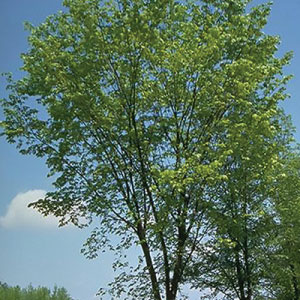
Planting Points: One of the most Dutch Elm Disease–resistant American elm cultivars—tested to show very high DED resistance. Fast‑growing with classic vase-shaped architecture, arching upward then outward. Excellent street tree due to its height, adaptability, and urban tolerance. Tolerates pollution, compacted soils, road salt, and drought once established. Requires consistent moisture during establishment for the first 2–3 years. Resistant to elm leaf beetle and moderately resistant to elm yellows (phloem necrosis), though monitoring is advised. Prune during dormant season (late fall to winter) to reduce risk of infection and preserve strong form. Root system is vigorous but not typically as disruptive as silver maple or cottonwood.
Siting This Tree: Excellent as a street tree, boulevard tree, or large shade tree in parks and campuses. Perfect for residential yards with adequate space for mature canopy spread. Ideal for restoring the historic elm-lined street aesthetic with improved disease resistance. Avoid planting under low utility wires due to height. Performs very well in urban landscapes, open lawns, windy sites, and moderately dry soils after establishment.