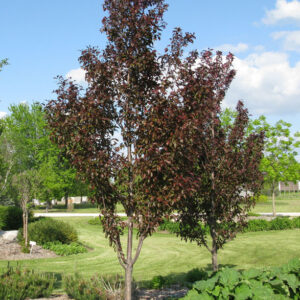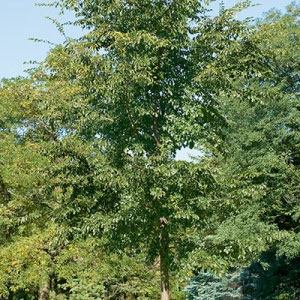
Description
Ulmus americana ‘Princeton’ / Princeton American Elm
Planting Points: One of the earliest widely planted Dutch Elm Disease (DED)–resistant American elms; highly resistant, though not immune. Classic American elm vase-shaped canopy with arching upper limbs and high branching — excellent street-tree form. Fast-growing yet strong-wooded, with good resistance to storm breakage. Tolerant of urban conditions, including drought, salt, compacted soil, and heat. More upright and stately than many modern cultivars; widely used in elm restoration projects. Resistant to elm leaf beetles and moderately resistant to elm yellows, though monitoring is recommended. Water regularly during establishment; becomes drought-tolerant later. Prune only during late fall or winter to minimize risk of disease transmission and to maintain vase structure.
Siting This Tree: Excellent for restoring historic elm-lined streets, boulevards, and avenues. Ideal for large residential yards, campuses, parks, and open lawns where full canopy spread can develop. Provides outstanding, arching shade over sidewalks and outdoor seating areas. Avoid planting under power lines due to mature height. Performs well in urban landscapes, windy sites, and moderately dry soils once established.